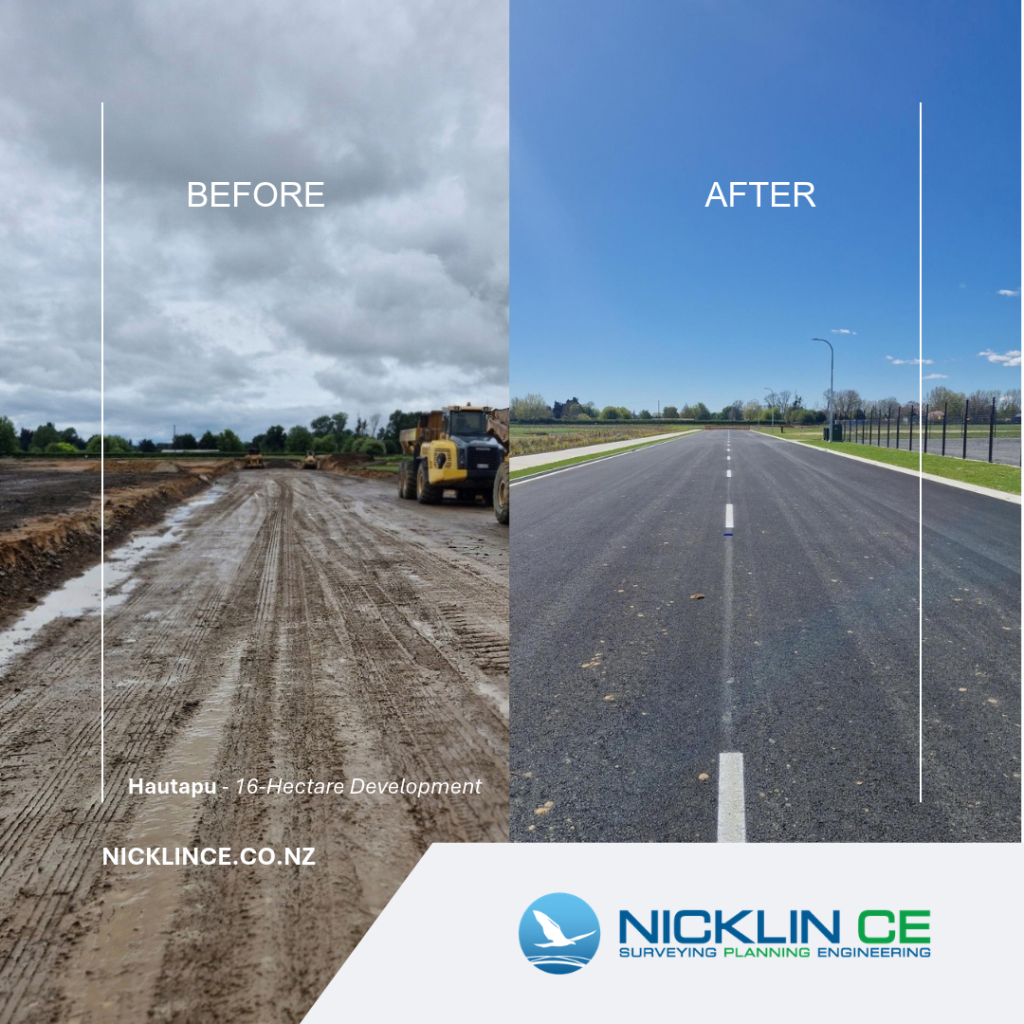
What does it take to turn 16 hectares of land into a new industrial development?

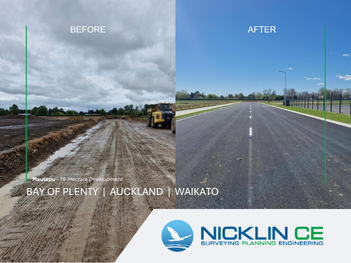
Hautapu Industrial Growth Cell 16-hectare development in Cambridge, showcasing Nicklin CE surveying, planning and engineering expertise throughout the land development process.

What does it take to turn 16 hectares of land into a new industrial development?

This project in Hautapu has involved a complete, end-to-end approach from our team, from the early design and planning stages through to consenting, construction supervision and the final stages of completion.

Located within the Hautapu Industrial Growth Cell, this significant 16 hectare development has required careful coordination across surveying, planning and engineering to bring the vision through to where it is today.

Our role has included designing the development, obtaining the necessary consents and supervising the works on site, working alongside the wider project team to keep things moving from plans to construction.

As the development approaches completion, we’re looking back at some of the work that has happened behind the scenes.

From detailed site work and technical design to construction set-out and onsite supervision, every stage plays an important part in creating an industrial development.

Projects of this scale don’t happen overnight, they often take years. They take expertise, coordination and plenty of work behind the scenes.

Check out the contrast, watch the video.

Rhys Kelly
Manager / Licensed Cadastral Surveyor | (BSurv), MS+SNZ
M: 027 317 7518  |  T: 07 827 4945  |  E: rhys.kelly@nicklince.co.nzwww.nicklince.co.nz
P: PO Box 754, Cambridge 3450
A: 6 Wilson Street, Cambridge, Waikato

Nicklin CE – Surveying Planning Engineering, the spark your next land development project needs!

Nicklin CE – Surveying Planning Engineering, supporting Waikato land development since 1990.

Could Nicklin CE – Surveying Planning Engineering, be the spark your next land development project actually needs?

Nicklin CE – Surveying Planning Engineering has been proudly serving the Cambridge and Waikato communities since 1990.

Since 1990, Nicklin CE – Surveying Planning Engineering has helped property owners, developers and businesses navigate land development across Cambridge and the wider Waikato region, including specialist integration across surveying, planning and engineering.

Founded by Cambridge local Grant Nicklin, Nicklin Surveying and Resource Management established a strong local reputation over three decades, over 35+ years, built on professional expertise, trusted relationships and a deep understanding of the region’s land and land development requirements.

In 2023, Nicklin CE – Surveying Planning Engineering was acquired by RPC – Surveying Planning Engineering, (RPC Limited), connecting its established Waikato presence with a wider surveying, planning and engineering consultancy operating across the Waikato, Bay of Plenty and Auckland regions.

Based in Cambridge, our Waikato team combines decades of professional and local experience with modern surveying technology and practical project management. We support clients through the complex stages of land development from initial land development investigations and feasibility through to surveying, planning, engineering support and subdivision.

Under the leadership of Rhys Kelly, Branch Manager of the Cambridge office, Nicklin CE – Surveying Planning Engineering continues to build on its established local history while embracing new technology, collaboration and innovative approaches to land development. While our business has evolved over the years, our commitment to the Cambridge and Waikato community remains central to what we do. With more than 35+ years of local history behind us, Nicklin CE – Surveying Planning Engineering remains focused on helping shape the region’s future.

Planning a subdivision or considering the potential of your property? Talk to our Cambridge team about your next land development project; our 35+ years of local experience are bound to be a great start.

Rhys Kelly
Manager / Licensed Cadastral Surveyor | (BSurv), MS+SNZ
M: 027 317 7518  |  T: 07 827 4945  |  E: rhys.kelly@nicklince.co.nz

www.nicklince.co.nz

P: PO Box 754, Cambridge 3450
A: 6 Wilson Street, Cambridge, Waikato


Nicklin CE - Surveying Planning Engineering team working on a land development project.

Is your land development strategy working as hard as it could?

Senior Planner Gareth Moran discussing strategic land development opportunities and planning.

Senior Planner Gareth Moran discussing strategic land development opportunities and planning

Is your land development strategy working as hard as it could?

Here’s what one of our Senior Planners, Gareth Moran, has to say.

Land is one of the most valuable assets many people will ever own. But are you making the most of its potential?

For many property owners, development starts with a simple question: What else could I do with this land?

It might be subdividing a larger section, creating additional housing, developing a commercial or industrial opportunity, or investigating whether a property could support a use that sits outside its current zoning.

According to our Senior Planner Gareth Moran, these questions are becoming increasingly relevant as property owners look for ways to unlock value from land they already own.

“No more land is being created, so people are increasingly looking to maximise the productive value of the land they already own.” “The opportunity may be bigger than a subdivision.”

A two-lot subdivision might be the obvious starting point, but it is only one of many possibilities.

For some properties, the greatest opportunity may come from underutilised land, infill development or a change in land use. For others, the potential may lie in a more significant planning exercise, such as investigating an out-of-zone activity or pursuing a plan change.

These projects can carry greater upfront costs, longer timeframes and more risk, but they can also create substantially different outcomes where the underlying land opportunity is strong.

For example, moving land from a lower-value rural use towards an industrial or other higher-value use can potentially unlock significant value. The important question is not simply “Can I develop this?” but:

“What is the most appropriate and achievable use of this land, and what would it take to get there?”

That is where strategic planning becomes important.

Gareth believes the role of a planner has evolved considerably.

“The role of a planner is no longer that of a report writer; we are increasingly becoming project managers.”

For a client, that means good planning advice should extend beyond producing a document for council. It involves understanding the project, identifying risks and opportunities, communicating with the right people, coordinating the consent process and helping keep the development moving.

This becomes particularly important as projects become more complex.

“The earlier planning is considered, the more opportunity there is to shape the project around what is realistically achievable.”

There is no single development formula that works everywhere!

Auckland, Waikato and Bay of Plenty each have different land values, planning environments, development pressures and market expectations. Highly productive land is also an increasingly important consideration in parts of the Waikato, while different development pressures exist across the major urban areas.

Gareth’s experience reinforces the importance of understanding the property, the local planning environment and the intended market together.

That means a development strategy should not begin with a consent application. It should begin with understanding the opportunity.

With resource management reform continuing, the planning environment is evolving. New national direction is being introduced under the existing RMA while the Government progresses the replacement planning system, making it particularly important to base decisions on the rules that actually apply to your project today.

For landowners, developers and investors, this creates a reason to think strategically rather than simply react when a development idea arises.

Your property may already have an opportunity sitting within it.

It could be a straightforward subdivision. It could be infill development. It could be a change of land use. Or it could be a much larger opportunity that requires a more considered planning strategy.

Our planning team works alongside clients to identify opportunities, assess planning pathways and develop practical strategies, so before you decide what to build, it’s worth asking: “What could my land actually achieve?”

If you’re curious to learn more about Senior Planner Gareth Moran, click here. 

Nicklin CE - Surveying Planning Engineering team working on a land development project.


RMA Reform Update: What essential changes are coming for property owners and developers?

Nicklin CE – Surveying Planning Engineering provides an informative update on New Zealand’s RMA reforms and what the changes may mean for property owners and land development in the Waikato.

New Zealand’s planning system is undergoing its biggest overhaul in more than 30 years; the reforms are intended to simplify planning rules and reduce unnecessary consenting requirements when developing land. The claim comes from the New Zealand Government, specifically RMA Reform Minister Chris Bishop and Parliamentary Under-Secretary Simon Court.

On 30th of September 2026, the Planning Act and Natural Environment Act received Royal assent, beginning the gradual replacement of the Resource Management Act (RMA).

The current RMA will continue to apply during the transition, with the new planning system expected to become fully operational from 2030. However, some important changes will take effect earlier, from 30th of October 2026.

The RMA is being replaced by two separate Acts:

  • Planning Act: This primarily covers land use, subdivision and development.
  • Natural Environment Act: This primarily covers environmental matters, including freshwater, discharges and biodiversity.

Existing district and regional plans will progressively be replaced by a more coordinated planning framework, supported by long term regional spatial plans that identify future growth areas, infrastructure needs and development constraints.

While these changes are expected to create opportunities for some developments, the practical benefits will depend on the new national standards and planning rules introduced over the coming years.

So what does all this mean for your property or development?

The reforms are intended to simplify and standardise subdivision requirements, which could potentially create new development opportunities.

Subdivision will remain subject to planning rules and practical constraints, including infrastructure capacity, vehicle access, natural hazards and environmental requirements.

The existing RMA and district plan requirements will continue to apply during the transition, subject to the transitional amendments.

What about “Rezoning” ?

The current Government’s aim is to: “…make development more straightforward and reduce barriers to housing and land use.” As discussed in the NZ Herald article on the proposed overhaul of zoning rules, these changes could influence how land is zoned and what property owners may be able to develop in the future. Rezoning involves changing the designated use of land, such as from rural to residential, potentially creating new development opportunities, however, each property’s potential will still depend on the applicable planning rules, infrastructure, environmental constraints and approval requirements. Understanding all these factors can help support making better informed decisions about land use and property potential.

Importantly, from 1st of January 2028, councils will generally be unable to publicly notify new private plan changes unless a Ministerial exemption is granted.

If you are considering rezoning your property, we are suggesting that early action is now important, but simply lodging a private plan change request before this deadline will not guarantee that it can and will proceed.

What are some changes to consenting requirements?

From 30th of October 2026, amendments to the RMA will limit the matters councils can consider when assessing certain land use consent applications; these changes may simplify the assessment of some proposals and reduce consenting barriers; however, existing district plan rules will continue to apply, and the changes will not benefit every application.

What about infrastructure and development feasibility?

The changes to planning rules will not remove practical development constraints such as wastewater, stormwater, vehicle access or earthworks requirements.

New regional spatial plans will also identify areas for future growth and significant infrastructure needs over the next 30 years or longer.

Seeking advice from a qualified Planner will support understanding of these constraints early, and will remain essential when assessing development feasibility and costs.

So what about your “existing resource consents” … ? Now what?

Your existing resource consents will generally remain valid under the new system, with their conditions continuing to apply.

The legislation also provides for extensions to the expiry dates of certain consents. These extensions do not apply to every consent and do not necessarily extend the timeframe for giving effect to a consent.

We are recommending that landowners seek advice and review their existing consent conditions, expiry dates and lapse periods; support from one of our planners can help with this.

The transition period: what should you be doing now?

With the transition now fully underway, right now is a good time to review your property’s development potential, check those existing resource consent deadlines with your planner and consider whether any rezoning opportunities should be progressed.

For larger developments, understanding how future planning changes and infrastructure requirements could affect a project may make a significant difference to its feasibility, costs and timing, so it’s advised to seek professional advice from one of our planners as soon as you can.

How can Nicklin CE – Surveying Planning Engineering help you navigate the RMA Reform changes?

Nicklin CE – Surveying Planning Engineering has 30+ years of combined expertise in surveying, planning and engineering; this allows us to assess development opportunities from both a regulatory and practical perspective.

We assist property owners and developers to navigate these RMA Reform changes with professional insights from our qualified planners and cadastral surveyors, providing subdivision feasibility, resource consenting support, rezoning navigation, infrastructure assessments and development planning. You can also learn more here about our services across Surveying, Planning, and Engineering.

If you are considering subdividing? Purchasing development land? Rezoning a property or reviewing an existing consent? Our experienced team can help you understand how these RMA reforms may affect your specific development plans.

Reach out below to discuss your property or project with one of our teams across Waikato, Auckland and Bay of Plenty!

Nicklin CE – Surveying Planning Engineering | www.nicklince.co.nz | Waikato: (07) 827 4945

RPC – Surveying Planning Engineering | www.rpc.co.nz | Auckland: (09) 273 7505 | Bay of Plenty: (07) 575 4911

Article content

Disclaimer: Information is current as at 19th of October 2026. This article provides general information and is not legal advice, implementation dates and future national standards may be subject to change.*

Meet our Planner – Kerry Thompson, Planner

Kerry Thompson is a Planner at Nicklin CE - Surveying Planning Engineering.

Kerry Thompson, Office Manager at Nicklin CE – Surveying Planning Engineering.

“Having grown up in Cambridge, I have a strong connection to the area and a real appreciation for the people, places, and lifestyle that make this region such a great place to live. I enjoy the balance Cambridge offers, with easy access and short drives to beaches, camping spots, the outdoors, and the snow, while still being part of a close and active local community.

My involvement in resource management planning has developed naturally through my work with the team, and while it is not my only area of focus, it has become an aspect of the job that I really enjoy. Much of my work involves compliance and supporting projects as they progress through to completion, which has given me the opportunity to understand our clients’ needs from the outset and see projects through from start to finish. I find it rewarding being involved across different stages of a project, understanding the project parameters early, and helping ensure matters are worked through in a practical and organised way.

One of the aspects I value most is being part of a supportive and knowledgeable team. Having access to guidance, direction, and shared experience has been an important part of my development and allows me to contribute confidently while continuing to learn.

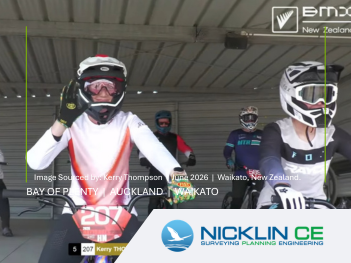
Outside of work, I am part of a very active household. Mountain biking, BMX racing, hiking, camping, and school sports keep us busy throughout the week and on weekends. I enjoy being able to work in a field that connects with people, places, and communities, while also living in an area that supports the lifestyle my family and I enjoy.” – Kerry Thompson, Planner (and Office Manager)

Cambridge Branch | Servicing Auckland, Waikato and Bay of Plenty Branches.


Planner
T: 07 827 4945  |  E: kerry@nicklince.co.nz

www.nicklince.co.nz

P: PO Box 754, Cambridge 3450
A: 6 Wilson Street, Cambridge, Waikato


Nicklin CE - Surveying Planning Engineering team working on a land development project.

Nicklin CE – Surveying Planning Engineering – LinkedIn (Learn More)

Meet our Planner – Gareth Moran, Senior Planner | BRS, MNZPI.

Senior Planner Gareth Moran from Nicklin CE – Surveying Planning Engineering

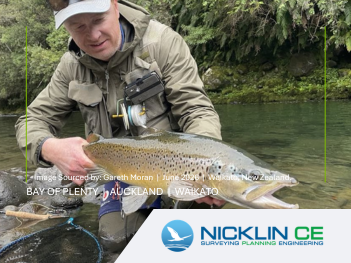
“A product of Te Kuiti, I have over 20 years’ experience in the planning industry I am passionate about local projects and working with local people. Across my career, I have built a strong understanding of resource management processes from both a local government and private consultant perspective, spending the last seven years working for private based clients within the Waikato Region. Prior to that, I managed the consent department at Waipa District Council.

Away from work, I have two young boys (0 and 9) , and love nothing more than heading up a remote river fly fishing or getting the boat out on the ocean. To my detriment, I’m also a passionate NZ Warriors fan and enjoy refereeing Hautapu Junior Rugby on Saturday mornings in winter.” – Gareth Moran, Senior Planner | BRS, MNZPI.

Cambridge Branch | Servicing Auckland, Waikato and Bay of Plenty Branches.

Senior Planner | BRS, MNZPI
T: 07 827 4945  |  E: gareth.moran@nicklince.co.nz

www.nicklince.co.nz

P: PO Box 754, Cambridge 3450
A: 6 Wilson Street, Cambridge, Waikato


Nicklin CE - Surveying Planning Engineering team working on a land development project.
Nicklin CE – Surveying Planning Engineering – LinkedIn. Learn More About Us.

Meet our Planner – Simone Williams, Senior Planner | BEMP, Int. NZPI.

Senior Planner Simone Williams from Nicklin CE – Surveying Planning Engineering

“I have fourteen years of experience, including time in local government and private practice. My experience includes the preparation and management of complex resource consent applications for residential, industrial, rural and subdivision developments, including notified applications. I have also prepared and presented planning evidence at Council hearings, acted as the planning lead for applicants in Environment Court mediation and provided due diligence and feasibility advice to clients across New Zealand.

For me, planning is about people, places and problem solving. I enjoy working with clients to understand what they are trying to achieve, then helping them navigate the consenting process in a practical and efficient way. I also enjoy the variety of the work. No two projects are ever quite the same.

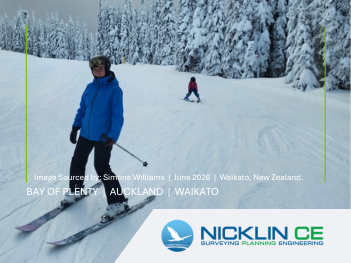
When I’m not at work, I’m usually out adventuring with my two children, aged 5 and 9. We love getting outdoors and exploring new places together. I also love skiing and running, and my happy place is definitely in the mountains, preferably with snow.” – Simone Williams, Senior Planner | BEMP, Int. NZPI.

Cambridge Branch | Servicing Auckland, Waikato and Bay of Plenty Branches.


Senior Planner | BEMP, Int. NZPI.
M: 027 254 3779  T: 07 827 4945  |  E: simone.williams@nicklince.co.nz

www.nicklince.co.nz

P: PO Box 754, Cambridge 3450
A: 6 Wilson Street, Cambridge, Waikato


Nicklin CE - Surveying Planning Engineering team working on a land development project.

Nicklin CE – Surveying Planning Engineering – LinkedIn. Learn More About Us.

Meet our Planner – Tom Christie, Planning Task Lead | BEP, Int. NZPI.

Senior Planner Tom Christie, providing expert planning and resource consent services.

Meet our Planner - Tom Christie, Planning Task Lead | BEP, Int. NZPI.

“As a Tauranga local with family based in the Bay of Plenty, I’ve always had a strong connection to the region and its communities. Watching the area grow and evolve over the years has given me a real appreciation for the balance between development, environmental values, and maintaining the qualities that make this region such a great place to live.

What I enjoy most about planning is the problem solving aspect. Every project presents its own challenges, and I find it rewarding working with clients, councils, and project teams to find practical solutions and help projects move forward. I also enjoy being part of a great team of like minded people who are passionate about what they do and committed to achieving positive outcomes.

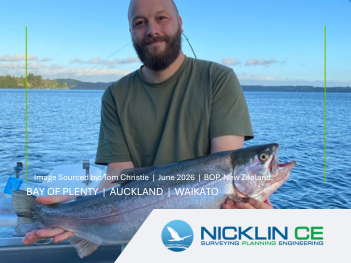
Outside of work, you’ll usually find me making the most of the outdoors. I enjoy fishing, hunting, hiking, working in my vegetable garden, and following sport. When I’m not out exploring the region, I’m often working on renovation projects around my house. Living and working in the Bay of Plenty allows me to combine my professional interests with the lifestyle I enjoy, which is something I value greatly.”  – Tom Christie, Planning Task Lead | BEP, Int. NZPI.

Mount Maunganui Branch | Servicing Auckland, Waikato and Bay of Plenty Branches.


Planning Task Lead | (BEP) Int.NZPI.
M: 027 230 1313  |  T: 07 575 4911  |  E: Tom.Christie@rpc.co.nz

www.rpc.co.nz

P: PO Box 5196, Mt Maunganui 3149
A: 321 Maunganui Road, Mount Maunganui, Bay of Plenty


RPC Surveying Planning Engineering team working on a land development project